Overview
Infertility Treatment and Delayed Pregnancy in Sharjah and Dubai
Understand the Causes of Delayed Pregnancy with the Right Medical Assessment
Experiencing difficulty getting pregnant can be stressful and emotionally challenging for individuals and couples. Delayed pregnancy may be associated with several factors affecting either the woman, the man, or both partners. Identifying the underlying cause often requires a medical assessment, a review of reproductive health history, and appropriate fertility investigations.
At Ebn Hayan Healthcare, women’s health and obstetrics and gynecology services are available through our healthcare locations in Sharjah and Dubai. The assessment of delayed pregnancy begins with understanding the patient’s medical history, menstrual cycle, ovulation patterns, and other factors that may influence reproductive health.
Whether you are trying to conceive for the first time or experiencing difficulty becoming pregnant after a previous pregnancy, a medical consultation can help identify possible causes and determine the appropriate next steps.
Contact Ebn Hayan to inquire about women’s health services and arrange a consultation at a convenient location in Sharjah or Dubai.
What Is Infertility and How Is It Different from Delayed Pregnancy?
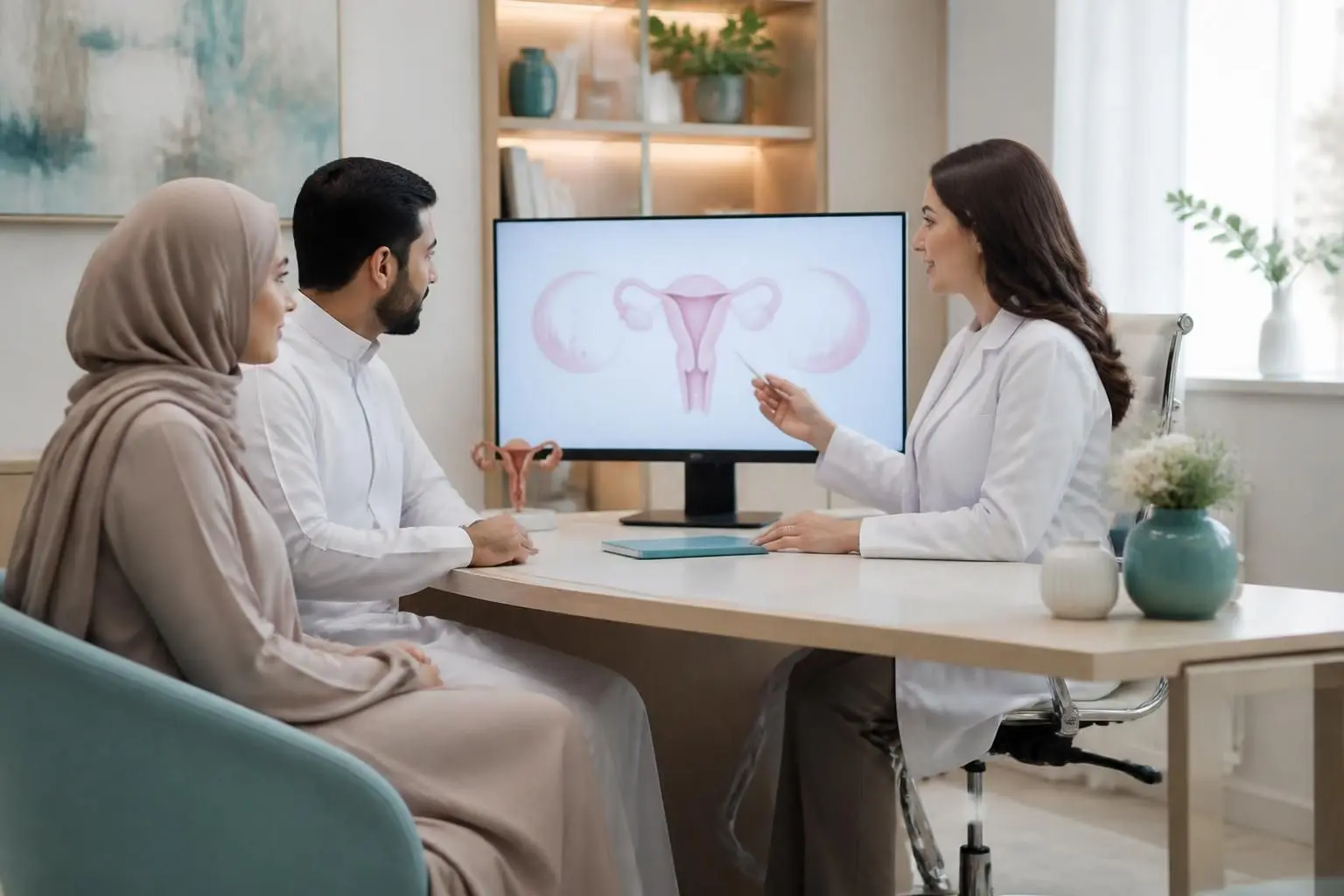
Infertility is a reproductive health condition generally defined by the World Health Organization as the inability to achieve pregnancy after 12 months or more of regular unprotected sexual intercourse.
However, the appropriate time to begin fertility investigations may vary depending on the woman’s age, medical history, and known reproductive health conditions.
Infertility is commonly classified into two main categories:
Primary Infertility
Primary infertility refers to situations where pregnancy has not occurred previously despite regular attempts to conceive.
Possible contributing factors include ovulation disorders, hormonal imbalances, uterine conditions, fallopian tube problems, or male reproductive factors.
Secondary Infertility
Secondary infertility refers to difficulty achieving another pregnancy after a previous pregnancy, whether it resulted in childbirth or pregnancy loss.
A previous successful pregnancy does not necessarily mean that fertility will remain unchanged over time. Age, hormonal changes, reproductive conditions, and other health factors may influence the ability to conceive again.
When Should You Consult a Doctor About Delayed Pregnancy?
Medical fertility assessment is generally recommended in the following situations:
- If pregnancy has not occurred after 12 months of regular unprotected intercourse when the woman is younger than 35.
- If pregnancy has not occurred after 6 months when the woman is 35 years or older.
- If the woman is over 40, an earlier assessment may be appropriate.
- If menstrual periods are irregular or absent.
- If there is a history of PCOS, endometriosis, or suspected fallopian tube problems.
- If there is a history of reproductive surgery or medical conditions that may affect fertility.
- If the male partner has previously received an abnormal semen analysis result.
- Following recurrent pregnancy loss, when a specific medical evaluation may be required.
You should not delay seeking medical advice simply because these time periods have not passed if you already have a known condition or symptoms that require assessment.
What Are the Causes of Infertility in Women and Men?
Infertility may result from one underlying condition or a combination of reproductive health factors. In some cases, the initial investigations may not identify a specific cause.
Causes of Female Infertility
1. Ovulation Disorders
Ovulation is the process through which a mature egg is released from the ovary. Irregular or absent ovulation may reduce the chances of natural conception.
Possible causes include:
- Polycystic Ovary Syndrome (PCOS).
- Hormonal imbalances.
- Elevated prolactin levels in certain cases.
- Thyroid disorders.
- Certain changes associated with body weight and general health.
2. Polycystic Ovary Syndrome (PCOS)
PCOS is a hormonal condition that may affect menstrual regularity and ovulation.
Some women experience irregular periods, infrequent ovulation, acne, or excessive hair growth. In certain cases, these changes may contribute to difficulty becoming pregnant.
Management depends on the woman’s symptoms, hormonal profile, general health, and pregnancy plans. Not every woman with PCOS requires the same treatment.
3. Fallopian Tube Problems
The fallopian tubes play an important role in natural conception by allowing the egg and sperm to meet.
Blocked or damaged fallopian tubes may interfere with this process.
Potential contributing factors include:
- Previous pelvic infections.
- Adhesions following surgery.
- Endometriosis.
- Certain reproductive or inflammatory conditions.
4. Uterine Conditions
Some uterine conditions may affect conception or pregnancy continuation, including:
- Uterine fibroids in certain locations.
- Endometrial polyps.
- Congenital uterine abnormalities.
- Intrauterine adhesions.
The significance of these conditions depends on their location, size, and actual impact on reproductive health.
5. Endometriosis
Endometriosis occurs when tissue similar to the lining of the uterus grows outside the uterine cavity.
It may be associated with painful periods, pelvic pain, and fertility difficulties in some women.
Assessment depends on symptoms, clinical examination, and appropriate imaging or specialist investigations.
6. Reduced Ovarian Reserve
Ovarian reserve generally changes with age and may decline earlier in some women.
The Anti-Müllerian Hormone (AMH) test may help assess ovarian reserve as part of a broader fertility evaluation.
However, AMH alone cannot determine whether a woman can or cannot achieve natural pregnancy. Results should always be interpreted alongside age, medical history, and other clinical findings.
Causes of Male Infertility
Fertility difficulties are not limited to women. Male reproductive factors may also contribute to delayed pregnancy.
Possible causes include:
- Low sperm count.
- Reduced sperm motility.
- Abnormal sperm morphology.
- Varicocele in certain cases.
- Hormonal disorders.
- Blockage of sperm transport pathways.
- Previous infections or medical conditions.
- Certain genetic or general health factors.
Assessing both partners, when appropriate, provides a more complete understanding of possible causes of delayed pregnancy.
How Is Infertility Diagnosed?
There is no single test that can identify every cause of infertility. Diagnosis usually involves reviewing medical history, assessing reproductive health, and selecting appropriate investigations based on individual needs.
1. Medical Consultation and Reproductive History
The initial consultation may include questions about:
- How long the couple has been trying to conceive.
- Menstrual cycle regularity and duration.
- Severe menstrual pain or pelvic discomfort.
- Previous pregnancies and pregnancy losses.
- Previous surgeries and medical conditions.
- Current medications.
- The male partner’s reproductive and medical history, when relevant.
2. Hormonal Blood Tests
Depending on symptoms and medical history, the doctor may recommend selected hormonal investigations, such as:
- FSH – Follicle-Stimulating Hormone.
- LH – Luteinizing Hormone.
- Estradiol.
- AMH – Anti-Müllerian Hormone.
- Prolactin, when clinically indicated.
- TSH – Thyroid-Stimulating Hormone, when appropriate.
Not every woman requires all these tests. The timing of certain investigations may also depend on the menstrual cycle.
3. Pelvic Ultrasound
Ultrasound imaging may be used to assess:
- The uterus and uterine lining.
- The ovaries.
- Ovarian cysts or fibroids.
- Antral follicle count, when assessing ovarian reserve.
- Certain findings associated with ovulation.
4. Uterine and Fallopian Tube Assessment
If the medical assessment suggests a possible uterine or fallopian tube problem, additional investigations may be recommended, including:
- Hysterosalpingography (HSG).
- Ultrasound-based contrast investigations.
- Hysteroscopy in selected cases.
The appropriate investigation depends on the patient’s clinical condition. These procedures are not routinely necessary for every patient.
5. Male Fertility Assessment
Male fertility assessment may include a semen analysis, which evaluates:
- Sperm concentration.
- Sperm count.
- Sperm motility.
- Sperm morphology.
If results are abnormal, further evaluation by a urologist or andrology specialist may be recommended.
What Are the Treatment Options for Infertility?
The appropriate treatment depends on the underlying cause, the woman’s age, how long the couple has been trying to conceive, and the reproductive health of both partners.
Depending on the diagnosis, treatment options may include the following:
Treatment of Ovulation Disorders
When ovulation is irregular or absent, treatment may focus on addressing the underlying cause.
In selected cases, ovulation-inducing medications may be considered under appropriate medical supervision.
The choice of medication, dosage, and monitoring requirements depend on the diagnosis and individual response.
Management of PCOS
PCOS management may include lifestyle adjustments, treatment of associated hormonal or metabolic conditions, and specific medications when medically indicated.
For women planning pregnancy, treatment may also focus on improving ovulation and reproductive health.
Treatment of Certain Uterine Conditions
Some women may benefit from treatment of uterine fibroids, endometrial polyps, or intrauterine adhesions when these conditions are confirmed to have a significant impact on fertility.
Treatment of Fallopian Tube Problems
Treatment depends on the location and severity of the blockage or damage.
Some cases may require specialist procedures or referral to a fertility center offering assisted reproductive technologies.
Management of Male Fertility Problems
Depending on the underlying cause, the male partner may require further evaluation by a urologist or andrology specialist to determine the appropriate treatment.
Assisted Reproductive Technologies
Some couples may require advanced fertility treatments, including:
- Intrauterine Insemination (IUI).
- In Vitro Fertilization (IVF).
- Intracytoplasmic Sperm Injection (ICSI).
These procedures have different indications and require appropriately licensed specialist centers and laboratory facilities.
A fertility specialist determines whether these options are appropriate based on the couple’s medical assessment.
Can Infertility Be Treated Without IVF?
Yes. Some fertility conditions may be managed without IVF, depending on their underlying cause.
For example, selected women with ovulation disorders may benefit from treating the underlying hormonal condition or medically supervised ovulation management.
Other conditions may require surgical treatment or assisted reproductive technologies.
The need for IVF cannot be determined by the duration of delayed pregnancy alone. A proper assessment of both partners is necessary before selecting a treatment approach.
How Should You Prepare for a Fertility Consultation?
Preparing for your appointment can help make the consultation more productive.
Consider the following steps:
- Record your menstrual cycle dates for the previous months.
- Bring previous blood test and ultrasound results.
- Prepare a list of current medications and supplements.
- Provide details of previous pregnancies, miscarriages, or reproductive procedures.
- Bring previous semen analysis results, if available.
- Write down any questions or concerns you would like to discuss with the doctor.
For couples experiencing delayed pregnancy, assessing both partners at the appropriate time can help identify possible contributing factors more efficiently.
Why Consider Ebn Hayan for Your Women’s Health Consultation?
Ebn Hayan Healthcare provides obstetrics and gynecology services through its healthcare locations in Sharjah and Dubai.
Our network of locations allows patients to inquire about women’s health services and choose a convenient location for consultation.
An important part of a responsible medical journey includes:
- Understanding the patient’s reproductive and medical history.
- Explaining possible causes of delayed pregnancy.
- Discussing the purpose of recommended investigations.
- Explaining medical findings in clear language.
- Identifying appropriate next steps based on clinical needs.
- Maintaining the privacy and confidentiality of medical information.
Treatment decisions should always be based on individual medical assessment. Some patients may benefit from obstetrics and gynecology follow-up, while others may require referral to a reproductive medicine specialist or a dedicated fertility center.
Where Can You Book a Consultation at Ebn Hayan?
You can contact Ebn Hayan to inquire about women’s health and obstetrics and gynecology services at the following locations:
Sharjah – Ebn Hayan Medical Center
Tabarak Tower, 26th Floor, Al Mamzar area.
Sharjah – Muwaileh Branch
Al Awqaf Building, Ground Floor, Muwaileh Commercial Area.
Dubai – Green Life Medical Clinics
Jumeirah Street, Jumeirah First.
Please confirm the availability of the appropriate doctor and requested service at your preferred branch before booking.
Take the First Step Towards Understanding Your Fertility
Delayed pregnancy does not necessarily mean that pregnancy is impossible. Identifying the possible cause requires an appropriate medical assessment rather than relying on assumptions or other people’s experiences.
If you are experiencing delayed pregnancy, irregular menstrual cycles, or possible ovulation problems, contact Ebn Hayan Healthcare to inquire about women’s health services and arrange a consultation in Sharjah or Dubai.
Ebn Hayan Healthcare – Medical Care That Begins with Understanding Your Needs.
Frequently Asked Questions About Infertility Treatment
1. When is delayed pregnancy considered infertility?
Infertility is generally defined as not achieving pregnancy after 12 months of regular unprotected sexual intercourse. Women aged 35 or older are generally advised to seek fertility assessment after six months of trying, while women over 40 may benefit from earlier evaluation.
2. What are the main causes of female infertility?
Female infertility may be associated with ovulation disorders, PCOS, fallopian tube problems, endometriosis, certain uterine conditions, and age-related changes in ovarian reserve.
3. Can PCOS prevent natural pregnancy?
PCOS does not necessarily prevent pregnancy. However, it may affect ovulation and menstrual regularity in some women. Appropriate medical management may help improve ovulation and reproductive health.
4. Does an irregular menstrual cycle affect fertility?
An irregular menstrual cycle may indicate an ovulation disorder, which can affect the chances of pregnancy. Medical assessment can help identify the underlying cause.
5. Can male infertility cause delayed pregnancy?
Yes. Male fertility factors may include low sperm count, reduced sperm motility, abnormal sperm morphology, hormonal disorders, and other reproductive health conditions. Semen analysis may be recommended as part of the couple’s fertility assessment.
6. What tests are required to diagnose infertility?
Depending on the individual case, investigations may include hormonal blood tests, pelvic ultrasound, ovarian reserve assessment, fallopian tube evaluation, and semen analysis.
7. What is the AMH test, and does it measure ovarian reserve?
The AMH test measures Anti-Müllerian Hormone levels and can help assess ovarian reserve. However, it cannot independently determine whether natural pregnancy is possible. Results should be interpreted alongside age, medical history, and other fertility investigations.
8. Can infertility be treated without IVF?
Yes. Some conditions may be managed through treatment of hormonal disorders, ovulation problems, or certain reproductive conditions. Other cases may require assisted reproductive technologies, depending on the diagnosis.
9. How long does infertility treatment take?
Treatment duration varies according to the underlying cause, test results, selected treatment approach, and individual response. Some patients may require ongoing monitoring, while others may need specialist procedures or referral.
10. How much does infertility treatment cost in Sharjah and Dubai?
The cost depends on the consultation, investigations, and treatment required. Contact Ebn Hayan to inquire about consultation fees, available services, and any additional costs before starting investigations.
11. Can I book a fertility consultation at Ebn Hayan in Sharjah or Dubai?
You can contact Ebn Hayan to inquire about obstetrics and gynecology services and the availability of a doctor who can assess delayed pregnancy concerns at its Sharjah and Dubai locations.
12. Should both partners undergo fertility testing?
In many cases, assessing both partners at the same time is appropriate because fertility difficulties may be associated with the woman, the man, or both. The doctor determines which investigations are needed based on the medical history and initial findings.