Overview
Femto-LASIK Vision Correction in Sharjah and Dubai
Clear vision plays an important role in everyday life. If you rely on glasses or contact lenses because of nearsightedness, farsightedness, or astigmatism, you may be considering laser vision correction.
Femto-LASIK is an advanced laser vision correction technique that uses a femtosecond laser to create a thin corneal flap, followed by an excimer laser to reshape the cornea and correct the refractive error.
At Ebn Hayan Healthcare, patients can enquire about eye assessments and available vision correction options. The suitability of Femto-LASIK depends on a detailed eye examination, corneal measurements, general eye health, and the patient’s individual needs.
Table of Contents
What Is Femto-LASIK?
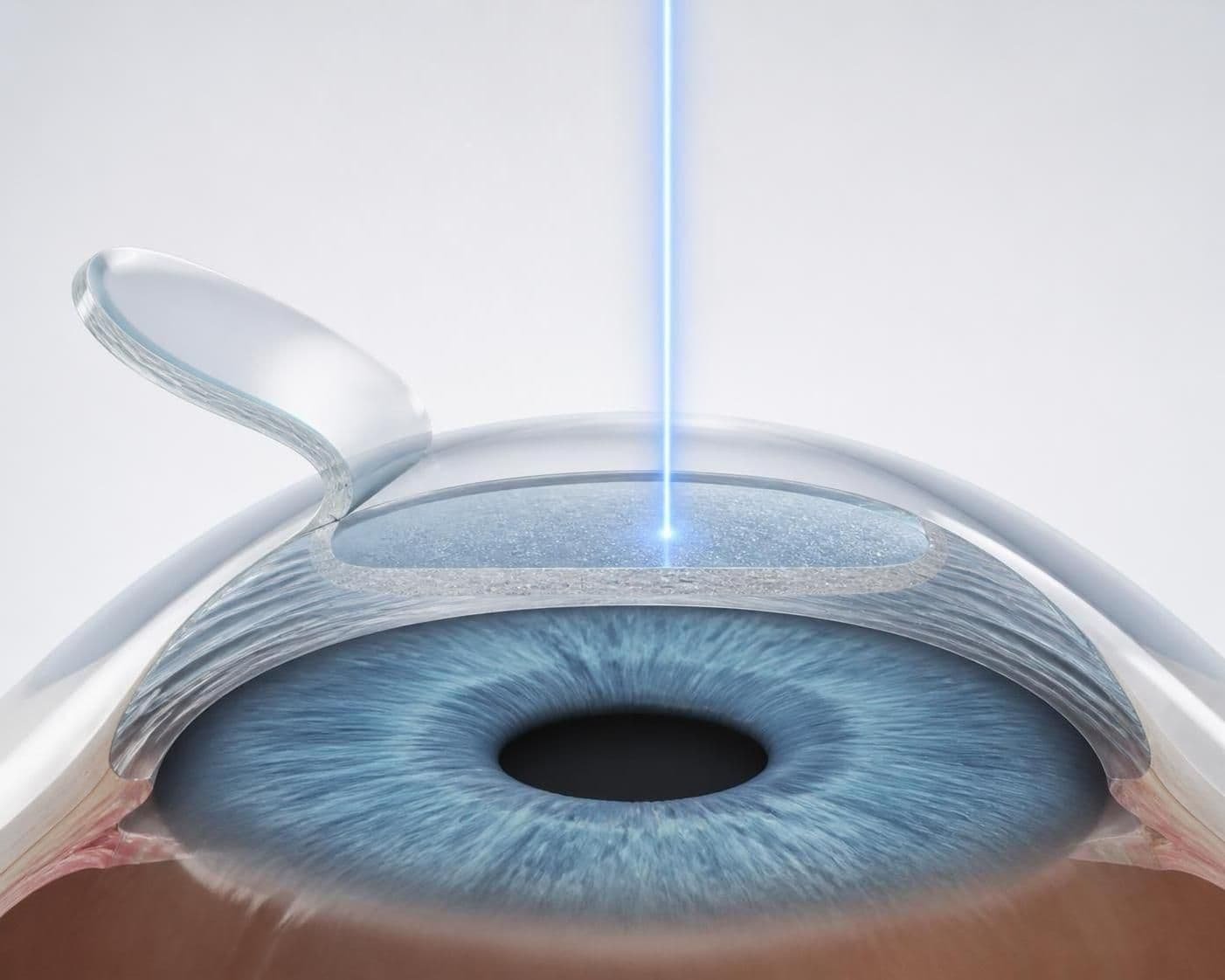
Femto-LASIK is a type of laser eye surgery designed to correct certain refractive errors by changing the shape of the cornea, the transparent front surface of the eye.
Unlike traditional LASIK, which generally uses a mechanical microkeratome blade to create the corneal flap, Femto-LASIK uses a femtosecond laser for this step.
The procedure typically involves two main stages:
- Femtosecond laser: Creates a thin, carefully planned flap in the cornea.
- Excimer laser: Reshapes the underlying corneal tissue to correct the refractive error.
The flap is then repositioned, where it naturally adheres during the healing process.
Femto-LASIK may help reduce dependence on glasses or contact lenses in appropriately selected patients. However, it is not suitable for everyone, and the expected results vary from person to person.
Which Vision Problems Can Femto-LASIK Correct?
Femto-LASIK may be considered for certain refractive errors, depending on their degree and the condition of the cornea.
1. Nearsightedness (Myopia)
Nearsightedness occurs when distant objects appear blurry while nearby objects are easier to see. It is commonly associated with the eye being longer than normal or the cornea having excessive curvature.
Femto-LASIK reshapes the cornea to help focus light more accurately on the retina.
2. Farsightedness (Hyperopia)
Farsightedness can make nearby objects difficult to see clearly. Depending on its severity, it may also affect distance vision.
Laser vision correction may be considered in selected patients after evaluating the degree of hyperopia and the corneal characteristics.
3. Astigmatism
Astigmatism occurs when the cornea or lens has an irregular curvature, resulting in blurred or distorted vision at different distances.
Femto-LASIK may correct certain degrees of astigmatism by reshaping the cornea to improve how light is focused.
The suitability of treatment depends on the type and degree of refractive error, corneal measurements, and overall eye health.
Femto-LASIK vs Traditional LASIK
Both Femto-LASIK and traditional LASIK are procedures used to correct refractive errors. The main difference is how the surgeon creates the corneal flap.
| Feature | Femto-LASIK | Traditional LASIK |
|---|---|---|
| Flap creation | Femtosecond laser | Mechanical microkeratome |
| Flap planning | Laser-controlled parameters | Mechanical instrument |
| Corneal reshaping | Excimer laser | Excimer laser |
| Surgical approach | Blade-free flap creation | Mechanical flap creation |
| Suitability | Depends on individual eye assessment | Depends on individual eye assessment |
Femto-LASIK offers a laser-based approach to flap creation, but this does not automatically mean it is the best option for every patient.
The most appropriate technique should be selected according to corneal thickness, corneal shape, refractive error, eye health, and the surgeon’s assessment.
Femto-LASIK vs SMILE and TransPRK
Several laser vision correction techniques are available. They differ in how the cornea is treated and how the procedure is performed.
Femto-LASIK
Femto-LASIK uses a femtosecond laser to create a corneal flap, followed by an excimer laser to reshape the cornea.
It may be considered for suitable patients with myopia, hyperopia, or astigmatism, depending on the treatment platform and clinical assessment.
SMILE
Small Incision Lenticule Extraction (SMILE) is a minimally invasive procedure in which a femtosecond laser creates a small disc-shaped piece of tissue inside the cornea. This tissue is removed through a small incision to correct the refractive error.
SMILE is generally used for selected cases of myopia and myopic astigmatism. Its suitability depends on the patient’s prescription and available technology.
TransPRK
TransPRK is a surface laser procedure that reshapes the cornea without creating a flap.
It may be considered for selected patients, including some whose corneal characteristics make flap-based procedures less suitable. Recovery is generally slower and may involve more discomfort during the initial healing period than LASIK procedures.
The choice between Femto-LASIK, SMILE, and TransPRK should always be based on a comprehensive eye examination rather than preference alone.
Who May Be Suitable for Femto-LASIK?
Not everyone who wears glasses or contact lenses is a suitable candidate for laser vision correction.
A patient may be considered for Femto-LASIK when several clinical conditions are met, including:
- Being an adult whose prescription has remained stable.
- Having a refractive error that falls within the treatment range.
- Having sufficient corneal thickness for the planned procedure.
- Having a corneal shape that is suitable for laser correction.
- Having generally healthy eyes.
- Not having certain conditions that may increase surgical risks.
- Understanding the expected benefits, limitations, and possible complications.
The final decision should be made by an ophthalmologist after reviewing the patient’s examination results and medical history.
When May Femto-LASIK Not Be Recommended?
Femto-LASIK may not be appropriate for patients with certain eye conditions or medical circumstances.
Examples include:
- Unstable or recently changing glasses prescription.
- Keratoconus or suspicious corneal topography.
- Insufficient corneal thickness.
- Severe or uncontrolled dry eye.
- Certain corneal diseases or previous eye conditions.
- Active eye infections or inflammation.
- Some autoimmune or medical conditions that may affect healing.
- Pregnancy or breastfeeding, when hormonal changes may affect prescription stability.
Having one of these conditions does not necessarily mean that all forms of vision correction are unsuitable. Other options may be considered after a specialist assessment.
Eye Examinations Before Femto-LASIK
A comprehensive eye assessment is essential before deciding whether Femto-LASIK is appropriate.
The examination helps the ophthalmologist evaluate the patient’s prescription, corneal structure, and overall eye health.
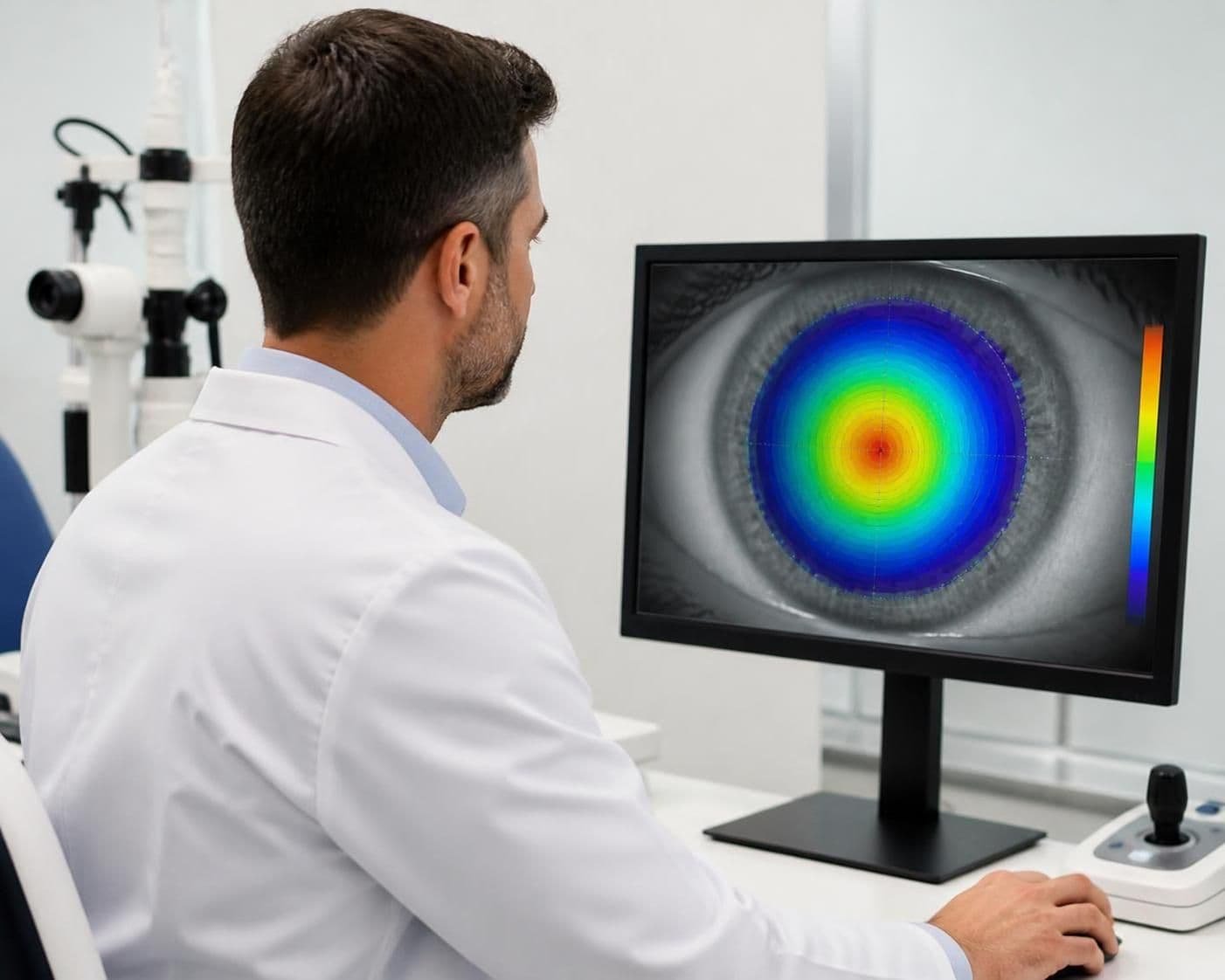
Depending on the patient’s condition, the assessment may include:
1. Refraction Test
Measures the degree of nearsightedness, farsightedness, and astigmatism to determine the current prescription.
2. Corneal Topography
Maps the surface curvature of the cornea and helps identify irregularities that may affect surgical suitability.
3. Pachymetry
Measures corneal thickness to help determine whether there is sufficient tissue for the planned treatment.
4. Dry Eye Assessment
Evaluates tear film quality and the condition of the ocular surface, as dry eye symptoms may affect both suitability and recovery.
5. Comprehensive Eye Examination
Assesses general eye health and checks for conditions that may affect the safety or expected outcome of the procedure.
The exact tests required may vary according to the patient’s medical history and examination findings.
How Is Femto-LASIK Performed?
Femto-LASIK is generally performed as an outpatient procedure. The treatment plan and expected duration depend on the patient’s condition and the technology used.
The procedure typically involves the following stages:
Step 1: Preparing the Eye
Numbing eye drops are applied to reduce discomfort during the procedure. The eye area is cleaned, and the patient is positioned under the laser system.
Step 2: Creating the Corneal Flap
The femtosecond laser creates a thin flap in the cornea according to the treatment plan.
Step 3: Reshaping the Cornea
The surgeon uses an excimer laser to remove a controlled amount of corneal tissue and correct the refractive error.
Step 4: Repositioning the Flap
The corneal flap is carefully returned to its original position. It generally adheres naturally without stitches.
Step 5: Initial Post-Procedure Assessment
The surgeon checks the eye after treatment and provides instructions for eye drops, protection, and follow-up appointments.
Patients should arrange transportation after the procedure, as vision may be temporarily blurred.
How to Prepare for Femto-LASIK
Following the pre-operative instructions can help ensure that the assessment and procedure are carried out appropriately.
Patients may be advised to:
- Stop wearing contact lenses for a period specified by the ophthalmologist before the assessment.
- Inform the doctor about existing medical conditions and medications.
- Mention any history of dry eye, eye surgery, or corneal problems.
- Avoid eye makeup and creams around the eyes on the day of the procedure.
- Arrange transportation home after treatment.
- Follow all instructions provided by the medical team.
Contact lens discontinuation periods vary according to the type of lenses worn and the individual examination findings.
Recovery After Femto-LASIK
Recovery varies between patients. Some people notice improved vision relatively soon after the procedure, while visual clarity may continue to fluctuate during the early healing period.
First 24 Hours
Patients may experience:
- Mild irritation or a gritty sensation.
- Temporary blurred vision.
- Light sensitivity.
- Watery eyes or discomfort.
Resting the eyes and following the prescribed eye-drop schedule are important during this stage.
First Few Days
Vision may continue to improve, although some fluctuation can occur. Patients should avoid rubbing their eyes and should follow the surgeon’s instructions regarding work, screen use, and daily activities.
Following Weeks
The eyes continue to heal. Follow-up appointments help the ophthalmologist monitor recovery and identify any issues that require attention.
Patients should not assume that vision has fully stabilized simply because they notice an early improvement.
Aftercare Instructions Following Femto-LASIK
Proper aftercare is an important part of recovery.
Patients are generally advised to:
- Use prescribed eye drops exactly as directed.
- Avoid rubbing or pressing on the eyes.
- Use protective eye shields if recommended.
- Avoid swimming and activities that may expose the eyes to contaminated water until cleared by the doctor.
- Avoid eye makeup for the period recommended by the surgeon.
- Attend all scheduled follow-up examinations.
- Contact the clinic promptly if they experience severe pain, sudden deterioration in vision, or unusual symptoms.
The ophthalmologist will provide instructions tailored to the patient’s recovery.
Expected Results of Femto-LASIK
Femto-LASIK aims to reduce dependence on glasses or contact lenses by correcting the refractive error.
However, the outcome is not identical for every patient. It depends on several factors, including:
- The original prescription.
- Corneal thickness and shape.
- The patient’s eye health.
- The accuracy of the pre-operative measurements.
- The healing response.
- The presence of other eye conditions.
Some patients may still need glasses for certain activities or reading as they get older. Laser vision correction also does not prevent age-related eye conditions such as cataracts.
A realistic discussion of expected results and limitations should take place before treatment.
Potential Risks and Side Effects of Femto-LASIK
Like other surgical procedures, Femto-LASIK carries potential risks and side effects.
These may include:
- Dry eye symptoms.
- Glare or halos around lights, especially at night.
- Temporary fluctuations in vision.
- Under-correction or over-correction.
- Difficulty with night vision.
- Corneal flap-related complications.
- Infection or inflammation.
- Rare but serious complications affecting vision.
The likelihood and severity of these risks vary between individuals. A detailed consultation helps patients understand their personal risk factors and available alternatives.
Why Choose Ebn Hayan Healthcare for an Eye Assessment?
Choosing a vision correction procedure begins with understanding the patient’s eye condition and identifying the most appropriate treatment option.
At Ebn Hayan Healthcare, patients can enquire about eye care services and available assessment options in Sharjah and Dubai.
The next step is to confirm the availability of the required technology, the treating ophthalmologist, and the location where the procedure is performed.
An appropriate treatment recommendation should be based on:
- A detailed eye examination.
- Accurate refractive measurements.
- Assessment of corneal thickness and shape.
- Discussion of available treatment options.
- Clear explanation of potential benefits and risks.
- An appropriate follow-up plan.
The objective is to help each patient understand their options and make an informed decision based on their individual eye health.
Book an Eye Assessment
If you are considering Femto-LASIK or another form of laser vision correction, a specialist eye assessment is the first step.
Contact Ebn Hayan Healthcare to enquire about available eye examinations, treatment options, and appointment details.
Phone / WhatsApp: +971 58 523 7711
WhatsApp: https://wa.me/971585237711
Contact the centre to confirm the branch, availability of Femto-LASIK, and the location where the procedure can be performed.
Frequently Asked Questions About Femto-LASIK
1. What is Femto-LASIK eye surgery?
Femto-LASIK is a laser vision correction procedure that uses a femtosecond laser to create a thin corneal flap and an excimer laser to reshape the cornea. It is used to correct selected refractive errors, including myopia, hyperopia, and astigmatism.
2. Is Femto-LASIK better than traditional LASIK?
Femto-LASIK uses a laser rather than a mechanical blade to create the corneal flap. However, neither technique is automatically better for every patient. The most suitable procedure depends on corneal measurements, prescription, eye health, and the ophthalmologist’s assessment.
3. Does Femto-LASIK correct astigmatism?
Femto-LASIK can correct certain degrees of astigmatism by reshaping the cornea. Suitability depends on the type and degree of astigmatism and the patient’s corneal condition.
4. Is Femto-LASIK painful?
Numbing eye drops are generally used during the procedure. Patients may feel pressure or mild discomfort, and temporary irritation or a gritty sensation can occur afterward.
5. How long does Femto-LASIK take?
The laser treatment itself is generally brief, but the total appointment takes longer because of preparation, positioning, and post-procedure checks. The medical team can explain the expected duration for the planned treatment.
6. How long does recovery take after Femto-LASIK?
Many patients notice an improvement in vision during the first few days. However, recovery and visual stabilization vary. Follow-up examinations are important to monitor healing.
7. Can both eyes be treated on the same day?
In many cases, both eyes may be treated during the same appointment. The decision depends on the patient’s clinical condition and the surgeon’s treatment plan.
8. Is Femto-LASIK suitable for everyone?
No. Patients need a stable prescription, suitable corneal thickness and shape, and generally healthy eyes. Certain eye conditions and medical circumstances may make the procedure unsuitable.
9. Can Femto-LASIK treat severe nearsightedness?
Femto-LASIK has treatment limits. Whether it is suitable for a high prescription depends on corneal thickness, corneal shape, and the amount of tissue that would need to be removed. Other vision correction options may be considered.
10. Can I return to work after Femto-LASIK?
Some patients can return to routine activities relatively soon, depending on their recovery and type of work. The ophthalmologist will advise when it is appropriate to resume work, driving, and other activities.
11. Can Femto-LASIK cause dry eyes?
Dry eye symptoms can occur after LASIK procedures. Patients with pre-existing dry eye should be assessed carefully before treatment, and appropriate management may be needed.
12. Is Femto-LASIK safe during pregnancy or breastfeeding?
Laser vision correction is generally postponed during pregnancy and breastfeeding because hormonal changes may affect the stability of the glasses prescription and the ocular surface. Patients should discuss the appropriate timing with their ophthalmologist.
13. Can vision problems return after Femto-LASIK?
Some patients may experience residual refractive error or changes in vision over time. Age-related changes can also affect near vision. The procedure does not prevent future eye conditions.