Overview
TransPRK Vision Correction in Sharjah and Dubai
Are you looking to reduce your dependence on prescription glasses or contact lenses? TransPRK may be one of the laser vision correction options your ophthalmologist discusses with you to correct certain refractive errors, including myopia, hyperopia and astigmatism, following a comprehensive eye examination.
TransPRK is a type of surface laser vision correction. It works by reshaping the cornea without creating a corneal flap, unlike LASIK surgery. Whether it is suitable for you depends on several factors, including your prescription, corneal thickness and shape, and the health of your eye surface.
At Ebn Hayan Healthcare, your vision correction journey should begin with a proper eye assessment and a clear discussion of the available options. Contact the centre to enquire about ophthalmology appointments and vision correction assessments in Sharjah and Dubai.

Table of Contents
What Is TransPRK Vision Correction?
TransPRK stands for Trans-epithelial Photorefractive Keratectomy. It is a type of surface laser eye surgery used to correct certain refractive errors.
The procedure uses an excimer laser to reshape the cornea, helping light focus more accurately on the retina.
Unlike LASIK, TransPRK does not require the creation of a corneal flap. The laser removes the thin outer epithelial layer of the cornea and then reshapes the underlying corneal tissue according to the treatment plan.
For this reason, TransPRK is sometimes described as a no-touch laser procedure. However, this does not mean that the procedure is free from discomfort, complications or recovery requirements. It also does not mean that every patient is suitable for it.
What Vision Problems Can TransPRK Correct?
Surface laser procedures, including PRK and TransPRK, may be used to correct certain refractive errors. Suitability depends on the patient’s prescription and examination results.
Myopia (Nearsightedness)
Myopia occurs when light focuses in front of the retina rather than directly on it. People with myopia often have difficulty seeing distant objects clearly.
TransPRK may help correct myopia by changing the curvature of the cornea so that light focuses more accurately on the retina.
Hyperopia (Farsightedness)
Hyperopia occurs when light focuses behind the retina. Depending on its severity, it may cause difficulty with near vision and sometimes distance vision.
An ophthalmologist can determine whether laser vision correction is an appropriate option after examining the patient’s eyes and reviewing the prescription.
Astigmatism
Astigmatism occurs when the cornea or lens has an irregular curvature, which can cause blurred or distorted vision at different distances.
Certain degrees of astigmatism may be corrected with laser vision correction. The suitability of TransPRK depends on individual corneal measurements and other clinical factors.
Not everyone with myopia, hyperopia or astigmatism is automatically suitable for TransPRK. A prescription alone is not enough to determine eligibility.
How Does TransPRK Work?
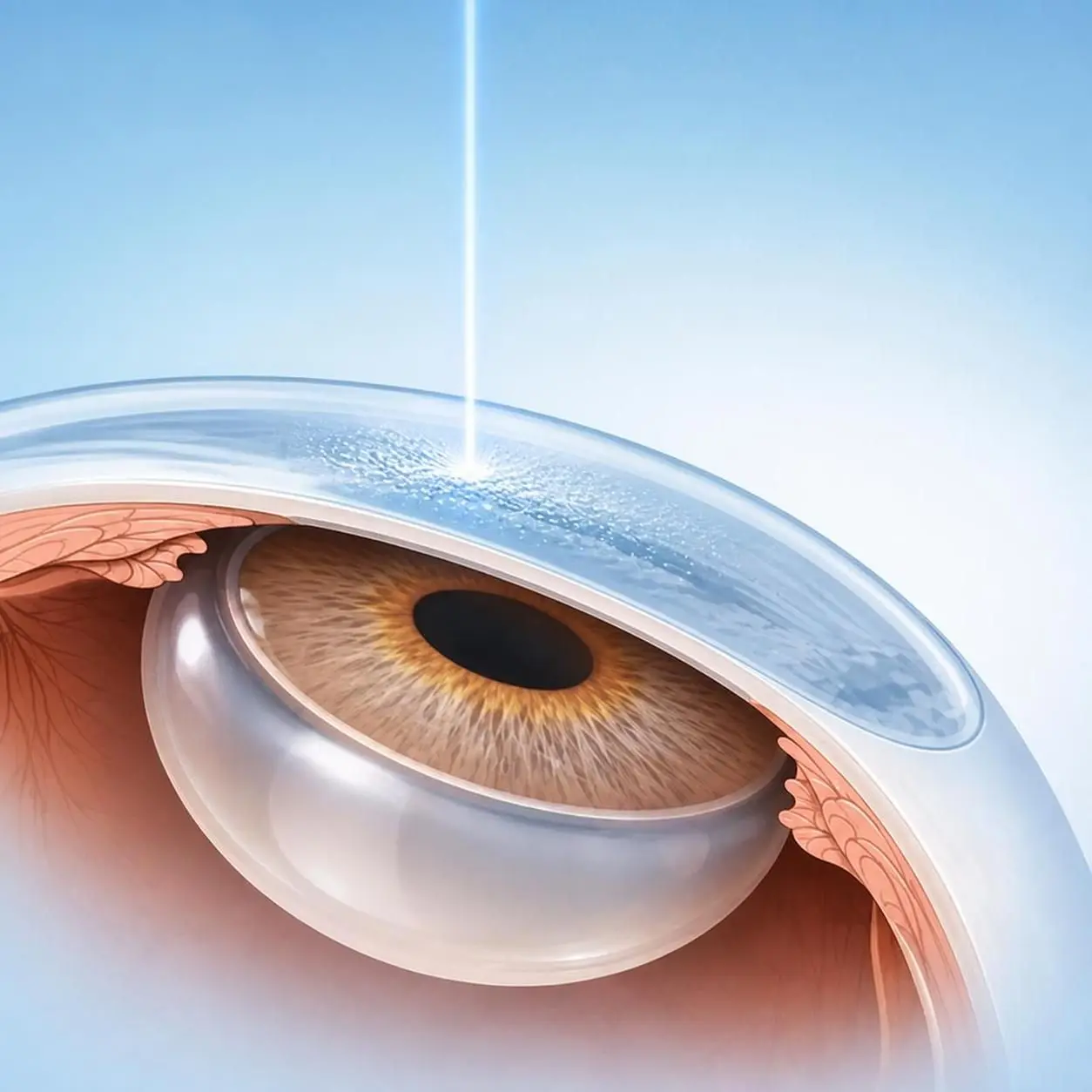
TransPRK is performed on the surface of the cornea using an excimer laser. Unlike LASIK, it does not involve creating a corneal flap.
The procedure can generally be understood in three stages:
- Epithelial removal: The laser removes the thin outer epithelial layer of the cornea.
- Corneal reshaping: The excimer laser reshapes the corneal tissue according to the patient’s treatment measurements.
- Initial healing: The surface cells begin to regenerate. The ophthalmologist may place a temporary bandage contact lens to protect the cornea during the healing process.
The exact procedure may vary according to the laser system, the patient’s condition and the surgeon’s treatment protocol.
Your ophthalmologist should explain the specific steps and expected recovery before the procedure is scheduled.
What Is the Difference Between TransPRK, PRK and LASIK?
Several laser procedures are used to correct refractive errors. There is no single technique that is suitable for everyone.
The main differences relate to how the surgeon accesses the corneal tissue and reshapes it, as well as the recovery process.
| Procedure | How it works | General considerations |
|---|---|---|
| TransPRK | The epithelial layer is removed using the laser before the cornea is reshaped | Does not require a corneal flap; the surface needs time to heal |
| PRK | The epithelial layer is removed before laser reshaping | A surface laser procedure; the method of epithelial removal may vary |
| LASIK | A thin corneal flap is created before the underlying tissue is reshaped | Initial visual recovery is often faster, but it is not suitable for every cornea |
Surface laser procedures may be considered for some people who are not suitable for flap-based procedures. However, a thin cornea does not automatically make TransPRK safe or appropriate.
The ophthalmologist must assess corneal thickness, shape, health and the amount of tissue that would need to be removed before recommending treatment.
Who May Be Suitable for TransPRK?
Eligibility is determined through a comprehensive eye examination. Wanting to stop wearing glasses is not, by itself, enough to establish suitability.
Your ophthalmologist may consider several factors:
- Whether your prescription has remained stable for the period considered appropriate by the doctor.
- Whether your corneal thickness and shape are suitable.
- Whether you have any corneal disease or active condition that could affect healing.
- Whether you have significant dry eye or another problem affecting the eye surface.
- Whether your expectations are realistic and consistent with the examination findings.
- Whether your general health and current medications are compatible with the procedure.
Some conditions may require delaying surgery or considering an alternative. These can include unstable prescriptions, certain corneal disorders such as keratoconus, and active eye inflammation or infection.
Age alone does not determine suitability. Prescription stability, eye health and a complete assessment are important.
What Tests Are Needed Before TransPRK?
Pre-operative examinations are essential because they help the ophthalmologist assess corneal safety and determine which vision correction option may be appropriate.
They may also identify conditions that make laser surgery unsuitable.
Refraction and Vision Assessment
The ophthalmologist measures the degree of myopia, hyperopia and astigmatism. Previous prescriptions may also be reviewed to assess whether the vision measurements have remained stable.
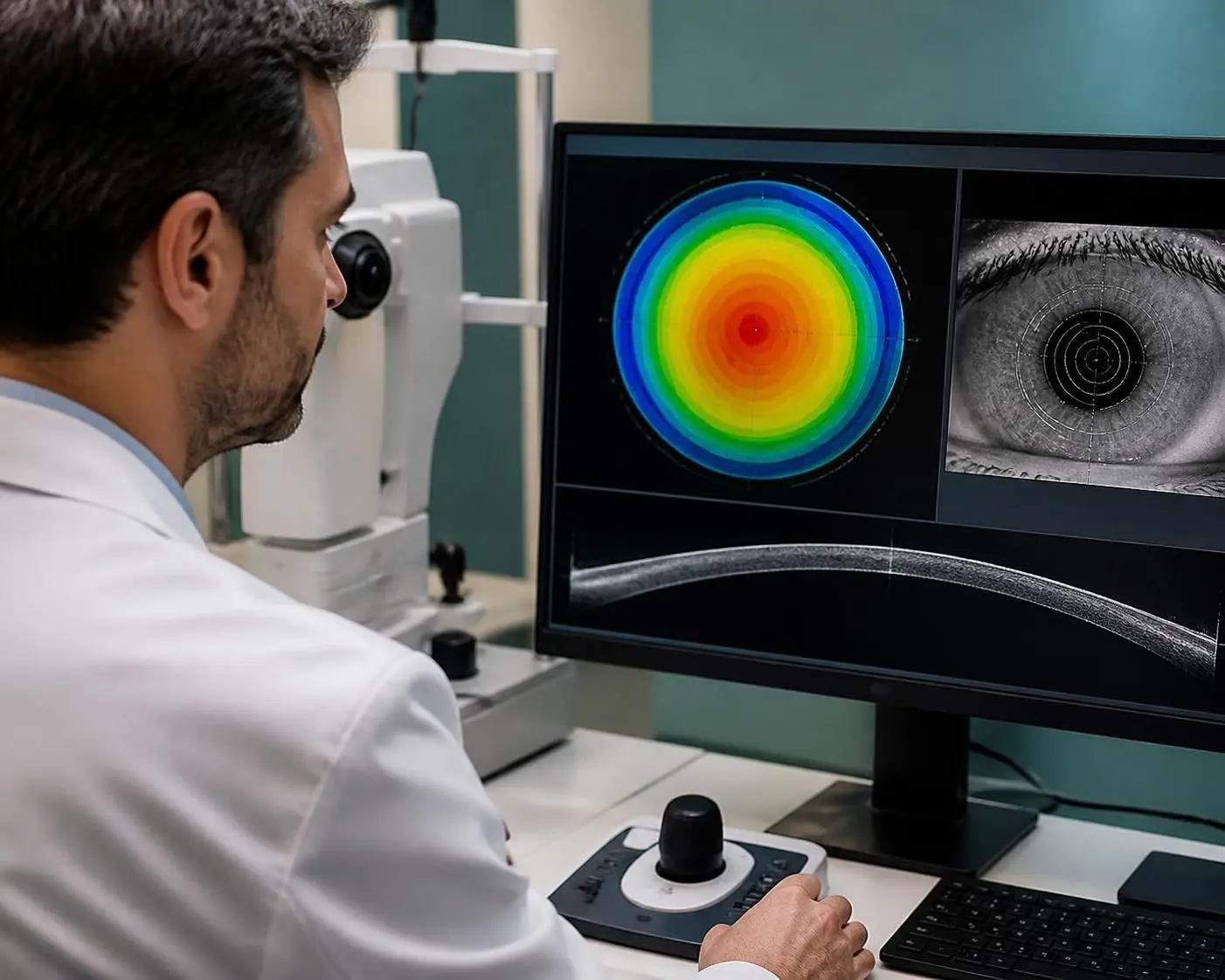
Corneal Topography
Corneal topography creates a map of the corneal surface. It helps assess corneal shape and identify irregularities or signs that may suggest an underlying corneal condition.
Pachymetry (Corneal Thickness Measurement)
Pachymetry measures corneal thickness. This is an important part of assessing whether enough healthy corneal tissue would remain after laser treatment.
Tear Film and Ocular Surface Assessment
The ophthalmologist may assess tear film quality and the health of the eye surface to identify dry eye, inflammation or other conditions that could affect comfort and healing.
Comprehensive Eye Examination
Depending on the patient’s condition, the assessment may include examination of the cornea, lens and retina, eye pressure measurement, and a review of medical history, medications and previous eye procedures.
Once the examinations are complete, the ophthalmologist can explain the findings and discuss whether TransPRK is appropriate or whether another treatment option may be more suitable.
How Should You Prepare for TransPRK?
Preparation depends on your examination results and your ophthalmologist’s instructions.
Before your appointment or procedure:
- Tell your ophthalmologist what type of contact lenses you use and how often you wear them.
- Ask how long you should stop wearing contact lenses before the measurements. This may vary depending on the lens type and your eyes.
- Mention any history of dry eye, allergies or eye infections.
- Inform the doctor about your medications, medical conditions and previous eye surgery.
- Do not start or stop prescribed eye drops or medication without medical advice.
- Follow the clinic’s instructions about eye makeup and cosmetics on the day of the procedure.
- Arrange transport home, as your vision may be blurred after treatment.
Do not rely on general online instructions instead of your doctor’s advice. Preparation requirements may differ between patients.
What Happens During a TransPRK Procedure?
TransPRK is generally performed using local anaesthetic eye drops. The patient remains awake during the procedure.
Before treatment begins, the ophthalmologist explains the steps and may ask the patient to focus on a light according to the laser system’s instructions.
The laser removes the surface epithelial layer and reshapes the cornea according to the treatment plan. A temporary bandage contact lens may be placed over the eye afterwards to protect the cornea while the epithelial layer regenerates.
The duration and exact steps depend on the patient’s condition, equipment and medical protocol.
Although TransPRK is often described as a no-touch procedure, it still requires appropriate anaesthesia, post-operative care and follow-up.
Recovery After TransPRK: What Should You Expect?
Recovery after TransPRK differs from LASIK because the surface epithelial layer of the cornea needs time to regenerate.
During the first few days, patients may experience discomfort, light sensitivity, tearing or blurred vision.
The First Few Days
You may experience:
- Burning or stinging sensations.
- A feeling that something is in the eye.
- Increased sensitivity to light.
- Tearing or watering.
- Blurred or fluctuating vision.
Your ophthalmologist may prescribe eye drops or medication to support healing and manage discomfort. A temporary bandage contact lens may also be used.
Do not remove the lens or change your treatment without medical advice.
During the First Week
The corneal epithelium begins to regenerate during the first few days. Your ophthalmologist will arrange a follow-up examination to assess healing and determine when the temporary bandage lens can be removed.
Vision may gradually improve, but it is not necessarily stable or fully clear at this stage.
The Following Weeks
Vision continues to improve and stabilise over time. Some patients may need several weeks or longer to reach their best visual outcome, depending on the prescription and individual healing response.
Recovery varies between individuals. Another patient’s experience should not be treated as a guaranteed prediction of your own results.
Aftercare Instructions Following TransPRK
Following your ophthalmologist’s instructions is an important part of recovery.
General recommendations may include:
- Use prescribed eye drops at the recommended times and doses.
- Avoid rubbing or pressing on your eyes.
- Wear sunglasses outdoors as advised by your doctor.
- Avoid swimming and activities that could expose your eyes to water or contamination until your doctor approves.
- Avoid eye makeup for the period recommended by your ophthalmologist.
- Attend all scheduled follow-up appointments, even if your vision feels better.
- Do not resume driving until your vision is suitable and your ophthalmologist confirms it is appropriate.
Contact your ophthalmologist or seek urgent medical assessment if you experience severe or increasing pain, sudden deterioration in vision, unusual discharge or significant redness.
What Results Can You Expect From TransPRK?
TransPRK aims to change the way light is focused inside the eye, improving vision and potentially reducing dependence on glasses or contact lenses.
Some patients may be able to carry out daily activities without glasses after treatment, while others may still need glasses for certain activities or tasks requiring precise vision.
Results depend on several factors, including:
- The degree of myopia, hyperopia or astigmatism before treatment.
- Corneal shape and thickness.
- Eye-surface health and the cornea’s healing response.
- The accuracy of the measurements and treatment plan.
- Natural changes in eyesight over time.
No specific visual result or complete freedom from glasses can be guaranteed for every patient.
Your ophthalmologist should explain the expected benefits and limitations based on your individual examination results.
What Are the Possible Risks and Side Effects of TransPRK?
Like other surgical procedures, TransPRK may involve side effects or complications. Their likelihood and severity vary between individuals.
Possible effects include:
- Pain or discomfort and light sensitivity during the first few days.
- Dry eye or a burning sensation.
- Blurred or fluctuating vision during healing.
- Halos or glare around lights, particularly in low-light conditions.
- Delayed healing of the corneal surface in some patients.
- Corneal haze or opacity.
- Undercorrection or overcorrection, which may require further assessment.
- Continued need for glasses or contact lenses for some activities.
Your ophthalmologist should discuss the relevant risks before treatment and explain how the eyes will be monitored afterwards.
It is important to ask about risks that apply to your own condition rather than relying on general statistics that may not reflect your individual circumstances.
Why Start Your Vision Correction Journey With an Eye Assessment at Ebn Hayan?
Choosing a vision correction procedure should not depend only on the name of a technique or an advertised price.
The most important first step is understanding your refractive error, assessing your corneal health and discussing the available treatment options.
At Ebn Hayan Healthcare, patients can enquire about ophthalmology services and appointment availability, discuss their vision concerns with the medical team, and ask about the examinations required before considering laser vision correction.
Before scheduling a procedure, patients should receive clear information about:
- The ophthalmologist responsible for assessing the case and performing the procedure.
- The recommended technique and the medical reasons for choosing it.
- The laser system used and the location where surgery takes place.
- The examinations included in the assessment.
- Preparation and recovery instructions.
- Post-operative follow-up appointments.
- The total cost and whether it includes examinations, medication and follow-up visits.
This information helps patients make an informed decision and understand the treatment journey before committing to surgery.
Enquire About a TransPRK Assessment at Ebn Hayan
If you are considering laser vision correction and would like to know whether TransPRK may be suitable for you, the first step is a comprehensive eye examination and a discussion with an ophthalmologist.
Contact Ebn Hayan Healthcare to enquire about ophthalmology appointments, available assessment locations and vision correction examinations.
FAQ About TransPRK
1. What is TransPRK vision correction?
TransPRK is a surface laser procedure used to correct certain refractive errors, including myopia, hyperopia and astigmatism. The laser removes the outer epithelial layer of the cornea and reshapes the underlying tissue without creating a corneal flap.
2. What is the difference between TransPRK and LASIK?
The main difference is how the cornea is treated. TransPRK reshapes the cornea from the surface after removing the epithelial layer, while LASIK involves creating a corneal flap before reshaping the underlying tissue. The appropriate technique depends on the patient’s examination results.
3. Is TransPRK suitable for thin corneas?
Surface laser procedures may be considered for some patients who are not suitable for flap-based procedures. However, having a thin cornea does not automatically mean TransPRK is safe or appropriate. Corneal thickness, topography and other safety factors must be assessed.
4. Is TransPRK eye surgery painful?
Local anaesthetic eye drops are used during the procedure. However, patients may experience pain, burning or light sensitivity afterwards, particularly during the first few days while the epithelial layer heals. Your ophthalmologist can recommend appropriate treatment to manage discomfort.
5. How long does recovery take after TransPRK?
The corneal surface begins healing during the first few days, but visual improvement and stabilisation take longer. Vision may continue to fluctuate during the following weeks. Recovery varies between individuals.
6. Can TransPRK correct astigmatism?
TransPRK may be used to correct certain degrees of astigmatism if the corneal measurements and prescription are suitable. Your ophthalmologist can determine this after an examination.
7. Can I return to work immediately after TransPRK?
You should not assume that you can return to work immediately. Vision may be blurred and discomfort or light sensitivity may occur during the first few days. Your ophthalmologist can advise how much rest you need based on your recovery and the nature of your work.
8. Does TransPRK permanently eliminate the need for glasses?
The procedure aims to reduce dependence on glasses or contact lenses, but complete freedom from glasses cannot be guaranteed for every patient. Some people may still need glasses for certain activities or as their vision changes naturally over time.
9. Can eyesight deteriorate again after TransPRK?
Changes in prescription may occur over time, and some patients may not achieve the full intended correction. Permanent stability cannot be guaranteed. Regular follow-up remains important.
10. What tests are required before TransPRK?
Pre-operative examinations commonly include refraction, corneal topography, corneal thickness measurement, tear film and ocular surface assessment, and a comprehensive eye examination. Additional tests may be needed depending on the patient’s medical history and examination results.
11. Is TransPRK better than Femto-LASIK?
Neither technique is universally better. They differ in how the procedure is performed, recovery and potential risks. The choice depends on corneal shape, thickness, prescription and overall eye health.
12. How much does TransPRK cost in Sharjah or Dubai?
The cost varies according to the clinic, surgeon, technology, examinations and services included in the package. Ask for a clear quotation showing whether it includes the pre-operative assessment, treatment for both eyes, medication, a bandage contact lens and follow-up appointments.
13. Can both eyes be treated during the same TransPRK session?
Both eyes may be treated during the same session in some cases. However, this depends on the ophthalmologist’s assessment and the medical protocol being followed. Confirm this during your consultation.
14. Do I need follow-up appointments after TransPRK?
Yes. Follow-up is important to check corneal healing, monitor vision and identify any problems early. Your ophthalmologist will determine the appropriate appointment schedule according to your recovery.
Medical disclaimer: This content is intended for general educational purposes and does not replace an eye examination or professional medical advice. Individual suitability and expected results cannot be determined without a clinical assessment.