Overview
LASIK Vision Correction in Sharjah and Dubai
Are you tired of relying on prescription glasses or contact lenses in your daily life? Are you looking for a way to reduce your dependence on them and enjoy clearer vision?
LASIK (Laser-Assisted In Situ Keratomileusis) is a widely used refractive surgery that helps correct certain vision problems, including nearsightedness, farsightedness, and astigmatism, by reshaping the cornea to improve how light focuses inside the eye.
At Ebn Hayan Healthcare, patients in Sharjah and Dubai can contact the center to inquire about ophthalmology services, vision correction options, and available consultation appointments.
The suitability of LASIK depends on several factors, including your prescription, corneal thickness, corneal shape, and overall eye health. An ophthalmologist must perform a comprehensive examination before recommending the appropriate treatment.
Choosing the right vision correction technique is a medical decision that should be based on individual examination results rather than prescription strength alone.
Considering LASIK surgery?
Contact Ebn Hayan Healthcare to inquire about an eye assessment and learn more about the next steps.
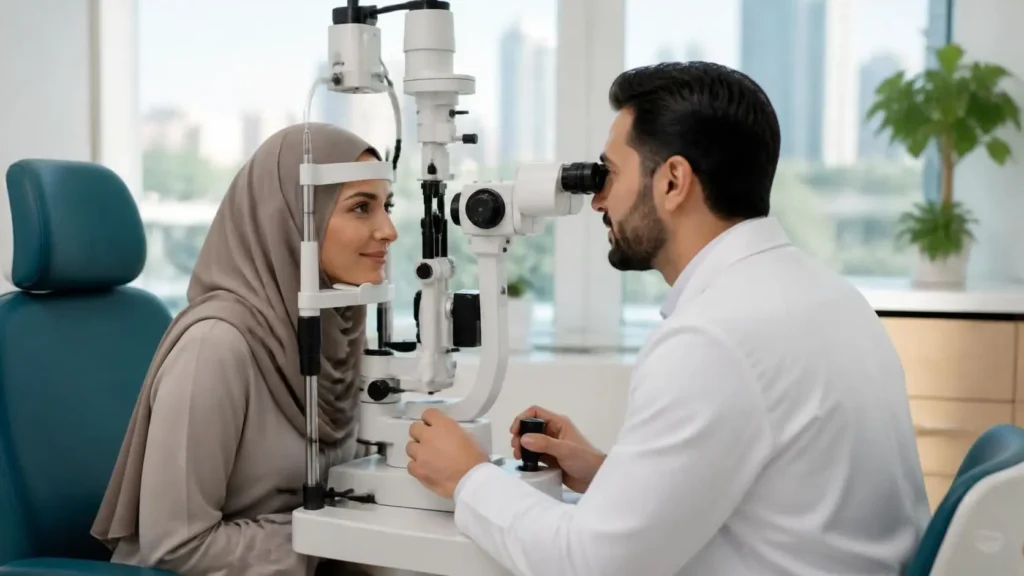
Table of Contents
What Is LASIK Vision Correction?
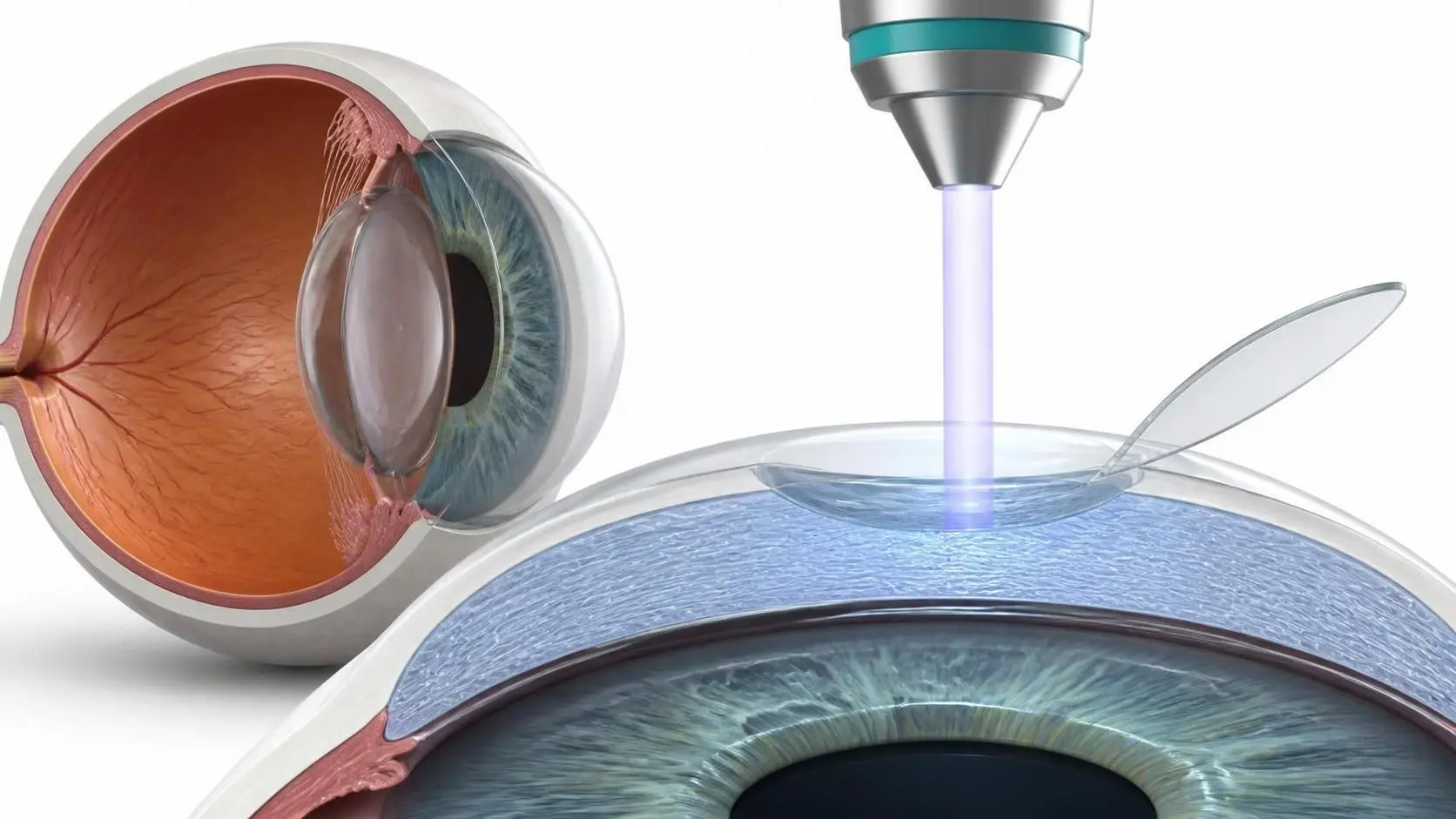
LASIK stands for:
Laser-Assisted In Situ Keratomileusis.
It is a refractive surgical procedure that uses laser technology to reshape the cornea, the transparent front surface of the eye responsible for helping focus incoming light onto the retina.
When light does not focus correctly inside the eye, a person may experience blurred vision or difficulty seeing objects clearly at different distances.
LASIK works by carefully adjusting the shape of the cornea according to the patient’s prescription, helping improve how light is focused inside the eye.
The procedure is commonly used to correct:
Myopia (Nearsightedness)
Myopia occurs when distant objects appear blurry while nearby objects are generally easier to see.
Hyperopia (Farsightedness)
Hyperopia can make nearby objects difficult to focus on, although distance vision may also be affected depending on its severity.
Astigmatism
Astigmatism occurs when the cornea or lens has an irregular shape, causing blurred or distorted vision.
The degree of correction varies from one patient to another. LASIK does not guarantee complete freedom from glasses in every case, and it does not prevent age-related vision changes such as presbyopia.
What Are the Different Types of Laser Vision Correction?
Not all laser vision correction procedures are the same.
Different techniques vary in how they treat the cornea, how the laser is applied, and how long the initial recovery period may take.
The most appropriate technique depends on the patient’s eye examination, corneal thickness, prescription, and overall eye health.
1. Traditional LASIK
Traditional LASIK involves creating a thin flap in the cornea, temporarily lifting it, and using an excimer laser to reshape the underlying corneal tissue.
The flap is then repositioned to begin the healing process.
Many suitable patients experience relatively rapid initial visual recovery. However, LASIK is not suitable for every corneal condition or every patient.
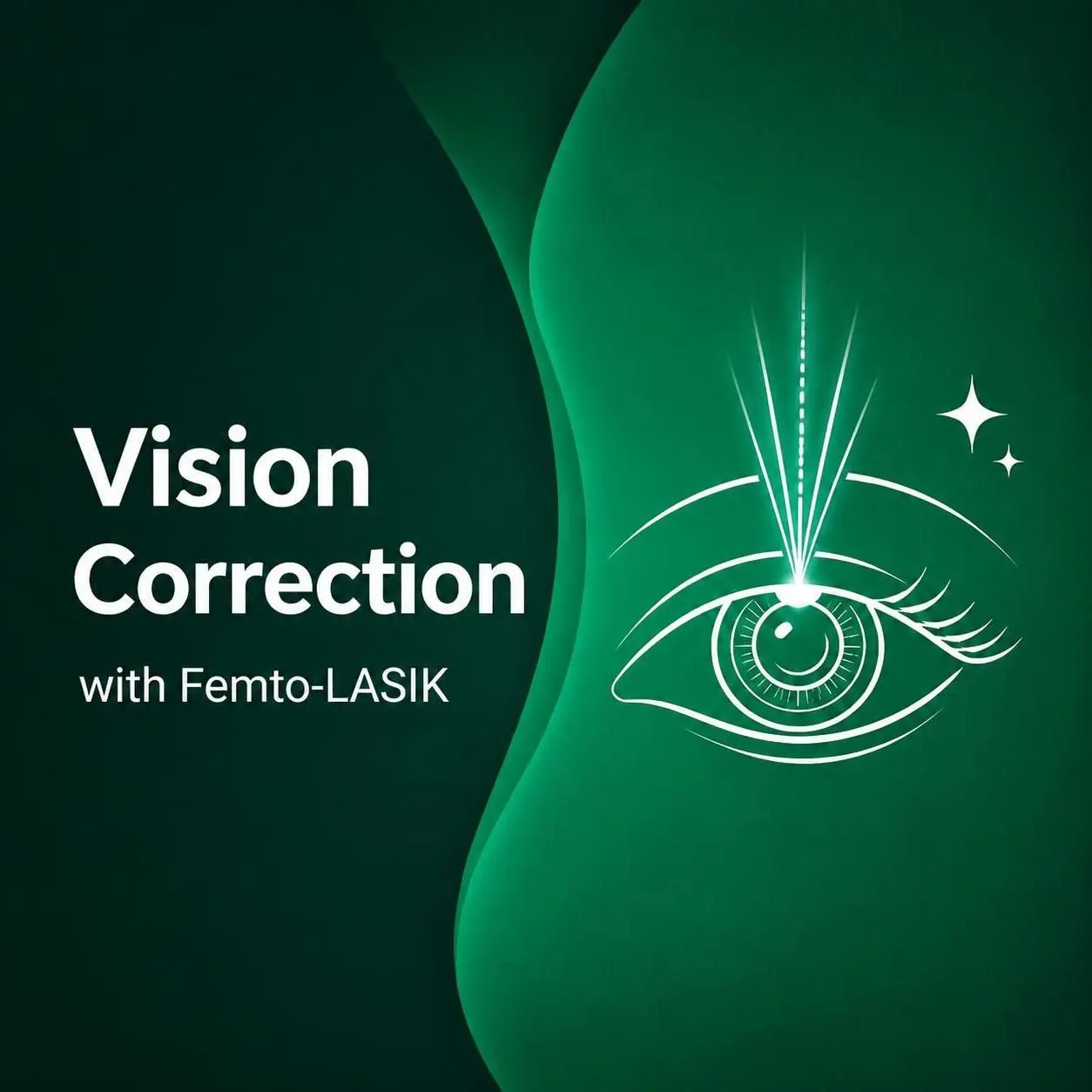
2. Femto-LASIK
Femto-LASIK is commonly referred to as bladeless LASIK.
Instead of using a mechanical instrument to create the corneal flap, this technique uses a femtosecond laser.
An excimer laser is then used to reshape the corneal tissue according to the required vision correction.
Femto-LASIK follows the general LASIK approach, but uses a different method to create the flap.
The technique is not automatically suitable for every patient, and individual assessment remains essential.
3. PRK (Photorefractive Keratectomy)
PRK is a surface-based laser vision correction procedure.
Unlike LASIK, it does not involve creating a corneal flap. Instead, the outer epithelial layer is removed, and an excimer laser reshapes the underlying corneal tissue.
PRK may be considered for certain patients who are not ideal candidates for LASIK, depending on their corneal measurements and overall eye health.
Initial recovery is generally longer than LASIK, and vision may take additional time to stabilize.
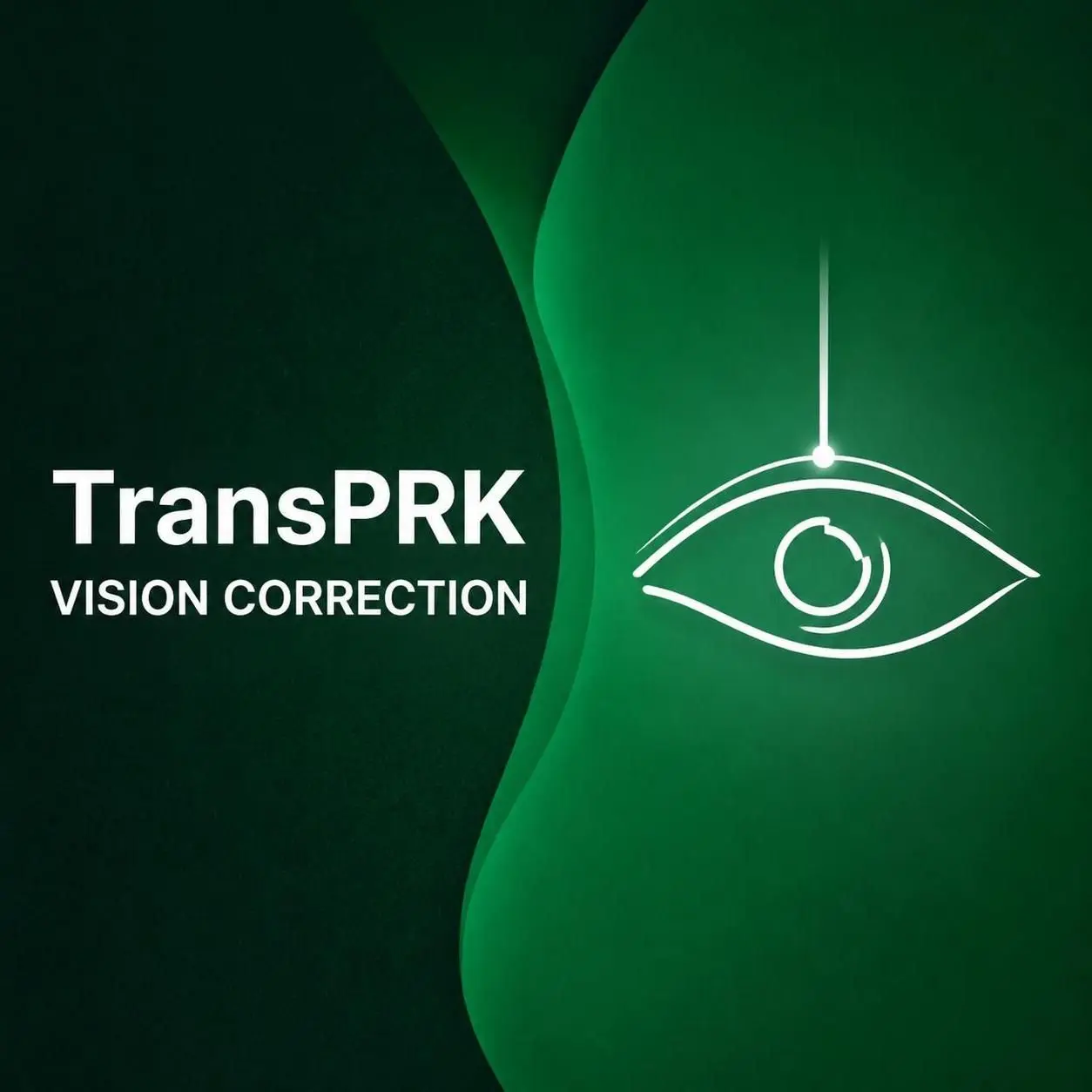
4. TransPRK
TransPRK is another surface-based laser vision correction technique.
It uses laser technology to remove the outer corneal layer and reshape the cornea without creating a flap.
It may be considered for selected patients depending on corneal characteristics and other examination findings.
However, it should not automatically be considered suitable for everyone with thin corneas. A comprehensive ophthalmic assessment is necessary.
5. SMILE and Femto-SMILE
SMILE stands for Small Incision Lenticule Extraction.
This technique uses a femtosecond laser to create a small piece of tissue called a lenticule inside the cornea.
The lenticule is then removed through a small incision, changing the corneal shape and correcting selected refractive errors.
Unlike traditional LASIK, SMILE does not require the creation of a large corneal flap.
It may be suitable for certain patients with specific refractive conditions, depending on their prescription and corneal characteristics.
Important: These techniques are included to explain available medical options. Their inclusion does not confirm that Ebn Hayan provides every procedure. Only techniques verified by the center should be presented as available services.
Comparison of Laser Vision Correction Techniques
| Technique | Procedure | Initial Recovery |
|---|---|---|
| LASIK | Corneal flap creation followed by laser reshaping | Generally rapid visual recovery |
| Femto-LASIK | Femtosecond laser creates the corneal flap | Similar general recovery pattern to LASIK |
| PRK | Surface-based corneal laser treatment without a flap | Usually longer initial recovery |
| TransPRK | Laser treatment of the corneal surface | Recovery varies by patient |
| SMILE | Removal of corneal tissue through a small incision | Different recovery characteristics from LASIK |
Who Is a Suitable Candidate for LASIK Surgery?
LASIK is not suitable for everyone who wears glasses or contact lenses.
A comprehensive eye examination is necessary to determine whether the procedure is appropriate.
In general, a potential candidate may meet the following criteria:
- Be an adult, usually aged 18 or older.
- Have a stable vision prescription.
- Have a healthy cornea with suitable thickness and shape.
- Not have severe dry eye disease affecting eye health.
- Have no active eye conditions that would make surgery unsuitable.
- Understand the potential benefits, limitations, and risks of the procedure.
- Have realistic expectations about the possible results.
When Might LASIK Not Be Recommended?
A doctor may recommend delaying surgery or considering an alternative procedure in cases involving:
- Keratoconus.
- Corneal thinning or unsuitable corneal thickness.
- Severe dry eye disease.
- Unstable vision prescription.
- Active corneal infections or inflammation.
- Certain eye diseases.
- Medical conditions or medications that may affect healing.
- Other visual conditions requiring treatment or assessment first.
If LASIK is not suitable, an ophthalmologist may discuss alternative options such as PRK or implantable collamer lenses (ICL), if medically appropriate.
The suitability of any alternative must also be determined through individual assessment.
LASIK suitability depends on corneal thickness, prescription stability, and overall eye health
What Tests Are Required Before LASIK Surgery?
Preoperative assessment is one of the most important stages of laser vision correction.
These examinations help determine whether the cornea and the rest of the eye are suitable for the procedure and which technique may be appropriate.
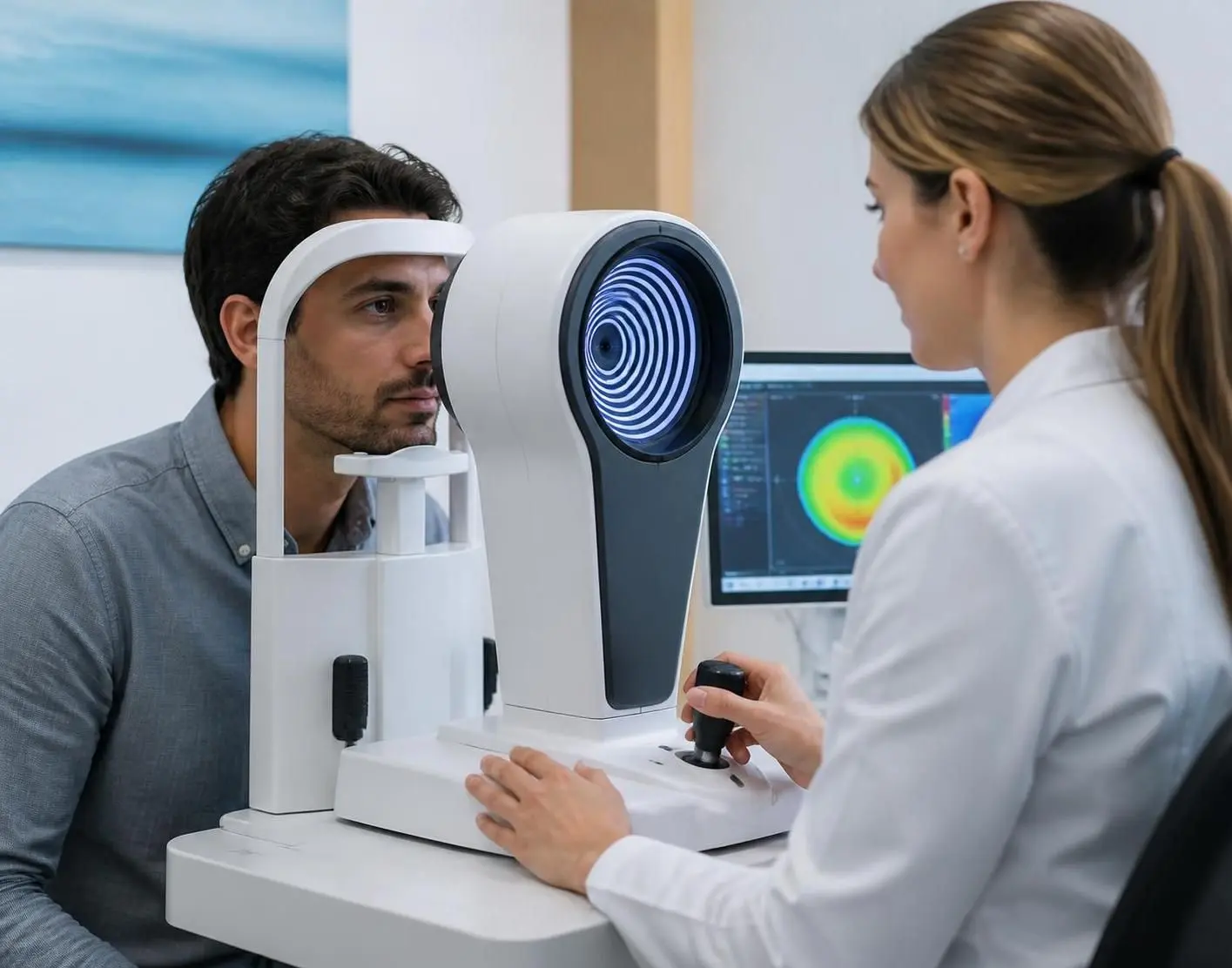
Depending on the patient’s condition, examinations may include:
1. Visual Acuity and Refraction Test
This examination measures visual clarity and determines the degree of myopia, hyperopia, and astigmatism.
Previous prescriptions may also be reviewed to assess whether the vision has remained stable.
2. Corneal Topography
Corneal topography examines the shape and curvature of the cornea.
It helps identify irregularities and certain corneal conditions that may affect the safety and suitability of laser vision correction.
3. Corneal Pachymetry
Pachymetry measures corneal thickness.
This is an important measurement when assessing how much corneal tissue can be safely reshaped.
4. Dry Eye Assessment
The doctor may evaluate tear production and the ocular surface to identify dry eye symptoms that could affect comfort and visual quality after surgery.
5. Comprehensive Eye Examination
The ophthalmologist examines the cornea, lens, retina, and other structures of the eye to identify conditions that may require treatment or additional evaluation.
6. Medical History Review
The patient may be asked about:
- Existing medical conditions.
- Current medications.
- Previous eye surgeries.
- Previous eye infections or injuries.
- Conditions that may affect healing or prescription stability.
Not every patient requires exactly the same tests. The ophthalmologist determines which examinations are necessary according to individual findings.
How Is LASIK Surgery Performed?
Once the patient has been assessed and the appropriate technique selected, the procedure generally involves several stages.
Before the Procedure
The ophthalmologist explains the procedure, expected outcomes, potential risks, and preparation instructions.
Patients who wear contact lenses may be asked to stop wearing them for a period before the final measurements because contact lenses can temporarily affect corneal shape.
The required period varies depending on the type of contact lenses and individual eye condition.
Patients should follow their doctor’s instructions.
During the Procedure
The general steps may include:
- The patient lies comfortably in the treatment room.
- Numbing eye drops are applied.
- The patient is asked to focus on a specific light.
- The surgeon performs the selected laser vision correction technique.
- The eye is checked according to the clinical protocol.
LASIK generally does not require general anesthesia. However, the exact procedure and duration depend on the selected technique and individual circumstances.
After the Procedure
The patient receives postoperative instructions, which may include:
- Using prescribed eye drops as directed.
- Avoiding rubbing or pressing the eyes.
- Wearing protective eye shields during sleep if recommended.
- Avoiding swimming and exposing the eyes to potentially contaminated water for the recommended period.
- Attending all scheduled follow-up appointments.
- Avoiding driving until vision is suitable and the doctor confirms it is safe.
LASIK Recovery: When Will Vision Improve?
One of the most common questions among patients considering laser eye surgery is how soon they can return to their normal activities.
Initial visual recovery after LASIK is generally faster than after PRK.
Some patients notice improved vision within the first day, but this does not mean that vision becomes completely stable immediately after surgery.
During the First Few Hours
Patients may experience:
- Mild burning or irritation.
- Itching or a foreign-body sensation.
- Temporary blurred vision.
- Light sensitivity.
During the First Day
Some patients notice significant visual improvement.
A follow-up examination may be scheduled to check the eyes and assess the early healing process.
During the Following Days
Vision may continue to improve gradually.
Some patients experience temporary dry eyes, light sensitivity, or fluctuations in visual clarity.
During the Following Weeks and Months
Some visual fluctuations and side effects may continue while the eyes recover and vision stabilizes.
Regular follow-up appointments help the ophthalmologist monitor the healing process.
Recovery varies from person to person and also differs between LASIK, PRK, and SMILE.
There is no single recovery timeline that applies to every patient.
What Are the Possible Risks and Side Effects of LASIK?
Although LASIK is widely used for refractive vision correction, it remains a surgical procedure with potential risks and side effects.
Patients should understand these risks before deciding to undergo surgery.
Possible side effects include:
- Dry eyes.
- Temporary light sensitivity.
- Halos around lights.
- Glare, particularly when driving at night.
- Blurred or fluctuating vision.
- Temporary itching, burning, or discomfort.
Less commonly, more serious complications may occur, including infection, inflammation, incomplete correction, or reduced visual quality.
Some patients may continue to need glasses or contact lenses after surgery.
Additional corrective procedures may be considered in selected cases, but they are not suitable for everyone.
For this reason, the ophthalmologist should explain the expected benefits, potential risks, and alternative treatment options before the patient provides informed consent.
Understanding the possible risks and side effects before deciding on LASIK surgery is important.
When Should You Contact Your Doctor?
Patients should contact their ophthalmologist immediately if they experience:
- Severe eye pain.
- Sudden deterioration in vision.
- Worsening symptoms instead of gradual improvement.
- Any unexpected symptoms that cause concern.
Do not wait until the next scheduled follow-up appointment if these symptoms occur.
Can Women Have LASIK During Pregnancy or Breastfeeding?
Hormonal changes associated with pregnancy and breastfeeding may affect the ocular surface, tear production, and vision measurements.
For this reason, these periods may not be suitable for elective laser vision correction.
Patients are generally advised to discuss postponing surgery until after pregnancy and breastfeeding and until vision measurements have stabilized.
The appropriate timing should be determined by the ophthalmologist according to the patient’s individual condition.
The menstrual cycle itself is not generally considered an automatic contraindication to LASIK. It should not be confused with the hormonal changes that may occur during pregnancy and breastfeeding.
If you are planning a pregnancy, currently pregnant, or breastfeeding, inform your ophthalmologist during the initial assessment.
Why Choose Ebn Hayan for LASIK Assessment?
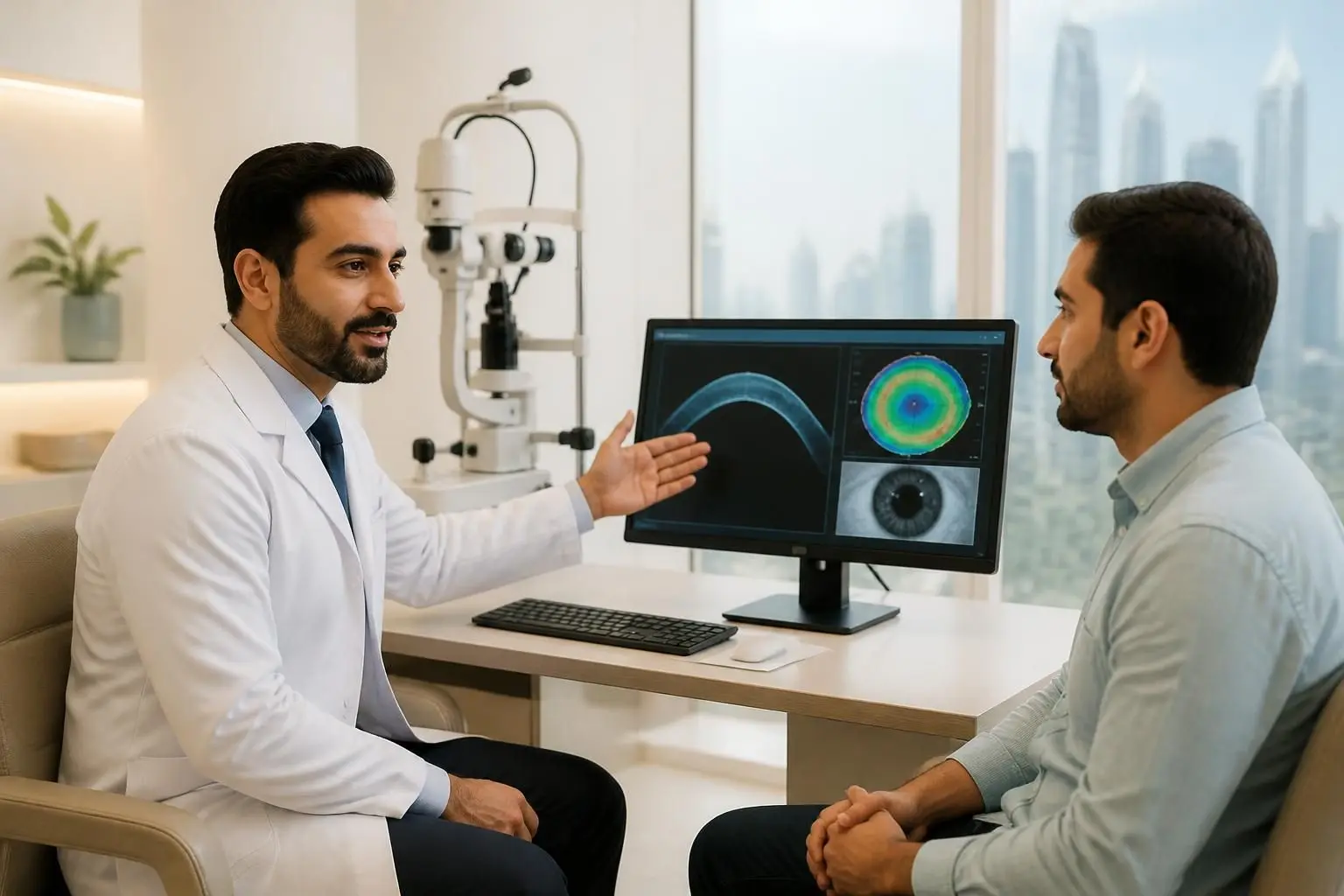
When considering laser vision correction, choosing a provider involves more than selecting a particular laser technique.
Patients should consider the quality of the medical assessment, the experience and qualifications of the ophthalmologist, the available treatment options, and the follow-up arrangements.
At Ebn Hayan Healthcare, patients can contact the center to inquire about ophthalmology services and available vision correction assessment options in Sharjah and Dubai.
The patient experience should focus on the following important elements, subject to confirmation of the services actually provided by the center.
Medical Assessment Before Treatment
Determining whether the patient is suitable for surgery based on prescription, corneal health, and the necessary examinations.
Clear Explanation of Treatment Options
Understanding the differences between available techniques and discussing their benefits and limitations according to individual eye condition.
Direct Communication With the Ophthalmologist
Giving patients the opportunity to discuss the procedure, possible risks, expected outcomes, and recovery.
Postoperative Follow-Up
Providing clear information about follow-up appointments, prescribed eye drops, eye care instructions, and when to seek medical attention.
Where Can You Inquire About LASIK in Sharjah and Dubai?
Ebn Hayan Healthcare welcomes inquiries from patients in Sharjah and Dubai through its official communication channels.
Before booking a procedure, patients are encouraged to ask about:
- Whether laser vision correction is available at the requested branch.
- Where the preoperative examinations are performed.
- Where the actual surgery takes place.
- Which techniques are currently available.
- The ophthalmologist responsible for the assessment and procedure.
- The required examinations.
- The cost of consultation, examinations, and surgery.
- Postoperative follow-up arrangements.
Having this information helps patients make informed decisions before scheduling surgery.
Start Your Journey Towards Clearer Vision
If you are considering laser vision correction, the first step is to find out whether your eyes are suitable for the procedure.
6. FAQ
1. What is LASIK vision correction?
LASIK is a refractive surgical procedure that uses laser technology to reshape the cornea and correct certain vision problems, including myopia, hyperopia, and astigmatism. It can help reduce dependence on prescription glasses and contact lenses.
2. Is LASIK suitable for all prescription levels?
No. Suitability depends on several factors, including prescription strength, corneal thickness, corneal shape, and overall eye health. A comprehensive examination is necessary to determine whether LASIK is appropriate.
3. What is the difference between LASIK and Femto-LASIK?
Both procedures involve reshaping the cornea using laser technology. However, Femto-LASIK uses a femtosecond laser to create the corneal flap instead of a mechanical instrument used in some traditional LASIK procedures.
4. What is the difference between LASIK and PRK?
LASIK involves creating a thin corneal flap before reshaping the underlying tissue. PRK is a surface-based procedure that does not require creating a flap. Initial recovery after PRK is generally longer than after LASIK.
5. Is LASIK surgery painful?
Numbing eye drops are used during the procedure, so significant pain is not generally expected. Patients may feel mild pressure or temporary discomfort. Burning or irritation may occur after surgery.
6. How long does LASIK surgery take?
The surgical procedure itself is relatively short. However, the total appointment includes preparation, examination, and postoperative instructions. The exact duration varies depending on the procedure and the patient’s condition.
7. When will I see clearly after LASIK?
Some patients notice improved vision within the first day. However, complete visual stabilization may take several weeks or months, depending on individual healing and the technique used.
8. Can vision problems return after LASIK?
Vision changes may occur over time. Some patients may experience residual refractive errors, and age-related changes such as presbyopia can develop even after successful LASIK surgery.
9. Can LASIK cause dry eyes?
Yes. LASIK may cause temporary dry eye symptoms or worsen existing dryness. Symptoms may last longer in some patients. Evaluating tear production and ocular surface health before surgery is therefore important.
10. How much does LASIK surgery cost in Sharjah and Dubai?
LASIK costs vary depending on the technique, prescription, required examinations, and included medical services and follow-up care.
For accurate pricing, patients should contact the center and ask what is included in the quoted price before booking.
Can LASIK be performed during pregnancy or breastfeeding?
Elective laser vision correction is generally postponed during pregnancy and breastfeeding until vision measurements and hormonal changes have stabilized. The appropriate timing should be discussed with an ophthalmologist.
Can both eyes be treated during the same LASIK session?
Both eyes can often be treated during the same session, depending on the patient’s condition and the surgeon’s clinical protocol.
Can I have LASIK if I have thin corneas?
LASIK may not be suitable for some patients with thin corneas. An ophthalmologist may consider alternative procedures, such as PRK, if appropriate.
Will I never need glasses again after LASIK?
LASIK can significantly reduce dependence on glasses, but complete freedom from glasses cannot be guaranteed. Some patients may still need glasses, particularly for reading as they get older.
When can I return to work after LASIK?
Some patients may return to desk-based work relatively soon, but the timing depends on recovery, the nature of the job, and the ophthalmologist’s instructions.